

The Cold Is Only Funny When It’s a Choice
A winter memory from two decades ago in Lviv, and the far harsher reality today


Spring is just about here, at long last.
It can’t come soon enough for so many.
It’s been a bitter winter worldwide and though I don’t mind the gloom, I know many are struggling.
Just over four years ago Russia launched its full-scale invasion of Ukraine, and it has been fourteen years since it first invaded Ukraine, in Crimea.
I left Kyiv on 14 February 2022 but it’s never far from my mind. This year has been an even tougher winter than usual because of the relentless attacks on Ukraine’s energy infrastructure. Millions are without heat and electricity for much or all of the day.
We’ll start off with what I hope is a light-hearted tale about my life in Lviv, western Ukraine, 20 years ago.
I’ll then turn it over to two guest contributors, who will share their first-hand, on-the-ground impressions of the cold, harsh reality of a Ukrainian winter.
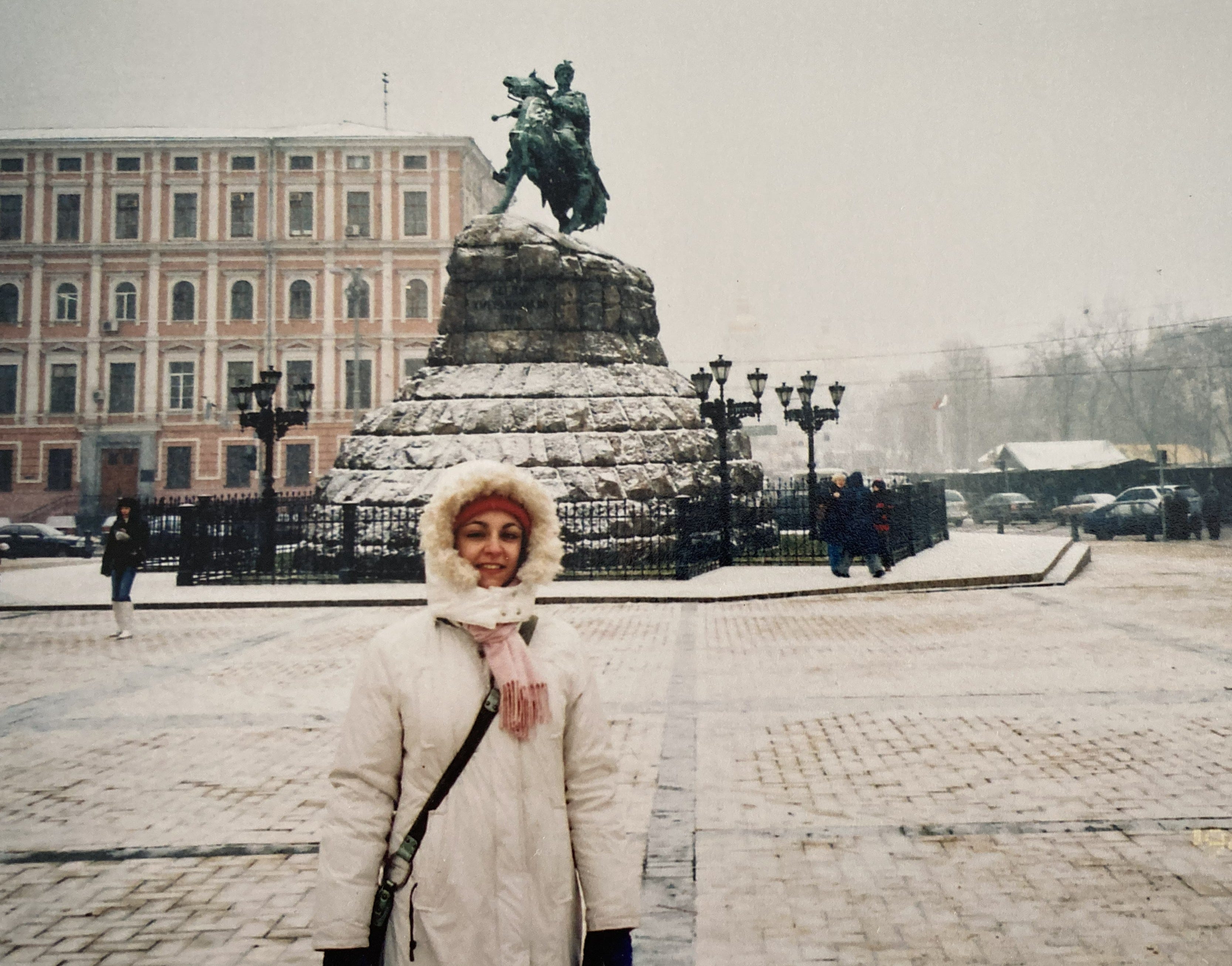
This time 20 years ago I was having a blast in the cold – literally and metaphorically.
It wasn’t much fun, but in a strange way, it was. I knew it would make a good story one day and here we are, two decades later and I’m telling it.
It was fun because it wasn’t life or death – it was an adventure.
At that age, adventure disguises itself as hardship. There’s a certain romance to survival when you know it’s temporary.
The scene: my first winter in Ukraine, Lviv. It was, if memory serves, the coldest winter Europe had seen in half a century. The temperature, at its lowest, plummeted all the way to -37C.
My home in Lviv was truly something else – a massive, spacious, Soviet-era flat with creaky wooden floors, box after box of old war medals, and copious jars of preserved vegetables dated from the late 1970s, and it was large enough to host multiple gatherings. The flat was provided by the school, I had no idea what the rent was and I never once met the landlady. I hope she wasn’t too upset with me for the pickled vegetables a friend and I cracked open late one night after a bit of boozing (a story for another time).
What the flat did not have was heat. Well, almost.
In one corner of one of the living rooms was an ancient ceramic heater called a pichka in Ukrainian. It took ages to heat up and was hardly worth it by the time I got home every evening.
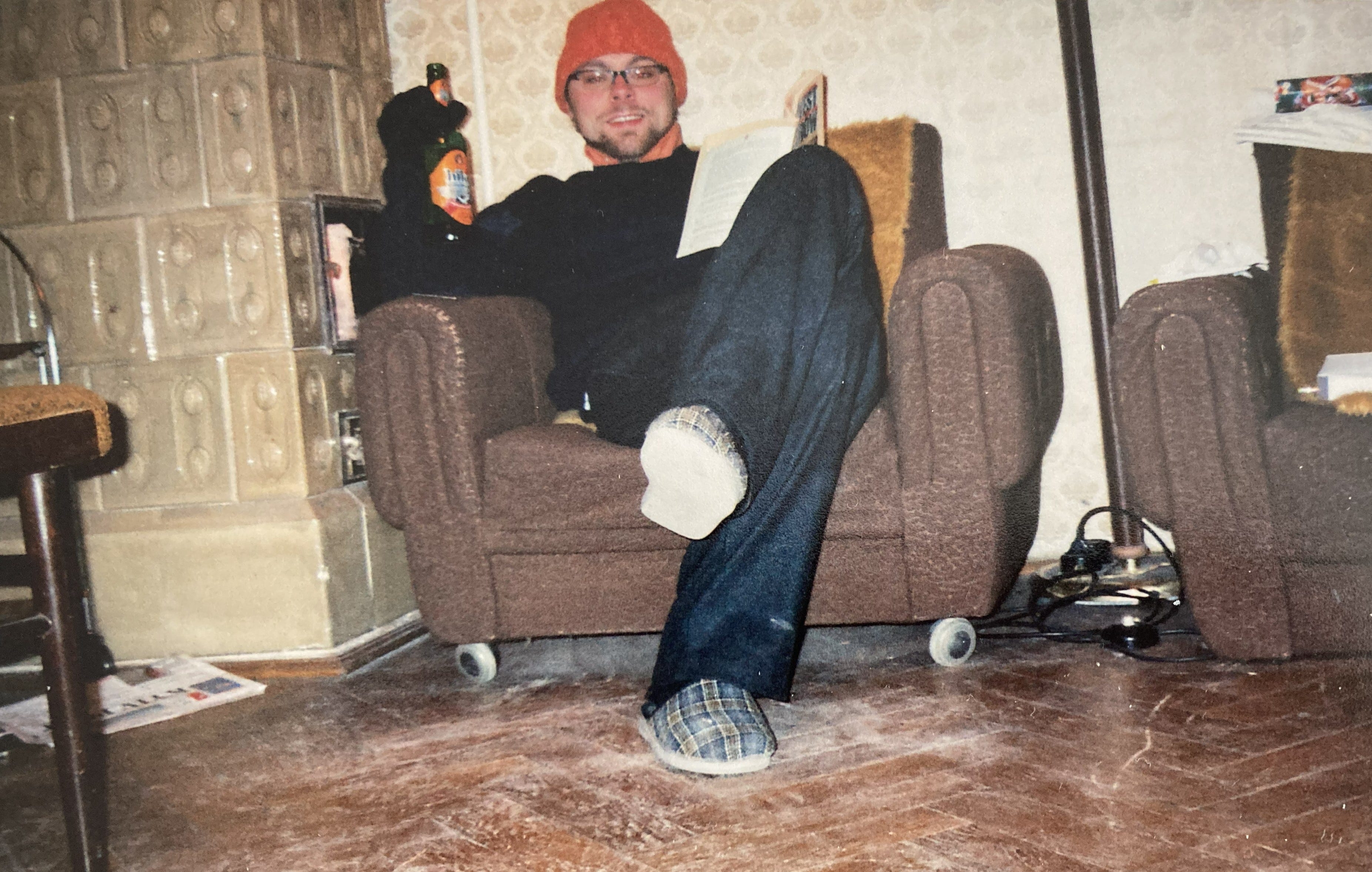
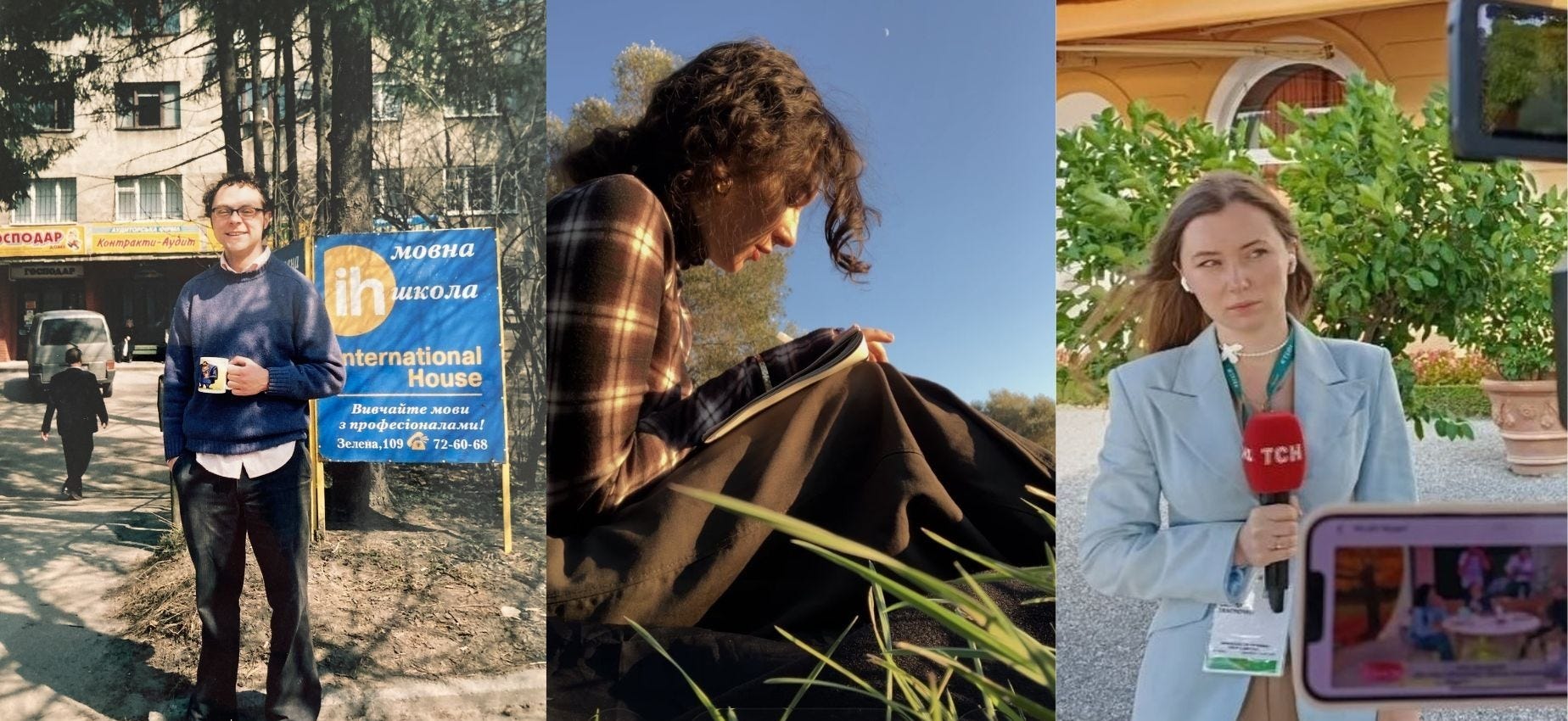
If I sat as close to the pichka as possible, as you can see in the photo, I was able to stay warm. But taking a shower in ice cold water, if there was any water, wasn’t fun, nor was spending time in the kitchen (and even more so when, after one raucous party, the kitchen window was broken – there’s no better motivation for improving one’s language skills than potentially freezing to death. I had to quickly learn the lingo for getting a new pane of glass and miraculously I not only did it, but despite my limited technical know-how managed to replace the window without losing a finger or having a major tantrum).
The water situation – now that was interesting. At the time in western Ukraine, most houses and establishments only had running water for 6 hours a day: from 6-9am and pm. I taught most days till close to 9pm and by the time I rushed home after my final class, I was lucky if there were a few trickles of water left. And because I finished so late, I went to bed late. Which meant getting up late.
Which often meant no water in the morning either.
(If you’re squeamish, skip this part – not having any water all day at the school meant that by 5-6pm, the uh, toilet situation was…not very pleasant. I mean, there were a lot of kids in there doing their, uh, business and…well, you can imagine how ghastly the toilets were later in the day.)
(One more interesting thing, nothing disgusting at all – a woman once cancelled a date on me for Saturday night with the excuse that she had to wash her hair, and let me tell you, this was 100% true, a totally genuine excuse.)
I could have used a match to light the ancient gas heater in the bathroom, as I had to do with the pichka, but it was liable to blow up with the condition it was in, most of the apparatus completely exposed. It wasn’t worth the risk. Doing laundry in ice cold water was one thing, but I’m a baby when it comes to frigid showers.
The upside was that I was in the best shape of my life during my nine months there. So desperate was I for hot water that my only recourse was to join the gym, one of the only establishments with hot water throughout the day and while I was there for the showers, I figured I might as well get in a few workouts. The kickboxing aerobics classes were intense and I was enjoying Pilates until I was politely asked to leave by the instructor after one class because apparently I was making the other participants uncomfortable as the only man in the class. I can assure you I was being a good boy and not flirting with anyone. The issue was that at that time in Ukraine, as I was informed by the kind receptionist in half English/half Ukrainian, it wasn’t “normal” for men to take Pilates classes. I really digress here, this is a topic for another time, where were we…(?)
This is my favourite story – the kitchen was an ice block, and I swear there were penguins inhabiting a corner of it. Friends told me to put a brick in the oven for heat, which barely helped. One morning I poured myself a glass of orange juice and then left it on the counter for a few minutes while I performed my ablutions. Upon returning, I discovered a thin layer of ice on the top.
You read that right – I could OPEN my FRIDGE to HEAT the KITCHEN.
From that point on, I didn’t bother putting things in the fridge – I just left stuff on the table and counters. After one party, there was a ton of leftover food which I left out for well over a week. My (sort of) girlfriend at the time, who’d come for the party, came one week later, saw the food still lying around, laughed, sighed, and shook her head. (That relationship didn’t last much longer, but I don’t know if it was because of my slovenly habits or not.)
That was a hell of a winter, and it was amusing. But what Ukraine has been facing is not funny or adventurous in any way.
You see, I had a choice, and I didn’t fear for my life. There was no threat of attacks, of drones, of ballistic missiles. My life was nowhere near in danger and there were ways of getting warm.
Today, millions of Ukrainians have been living through winter not as an anecdote, but as a test of endurance: power outages, intermittent heating, air raid sirens, the constant uncertainty of whether the lights or heat will stay on.
Twenty years ago, I could romanticise the cold because I knew it would end and because I was choosing it.
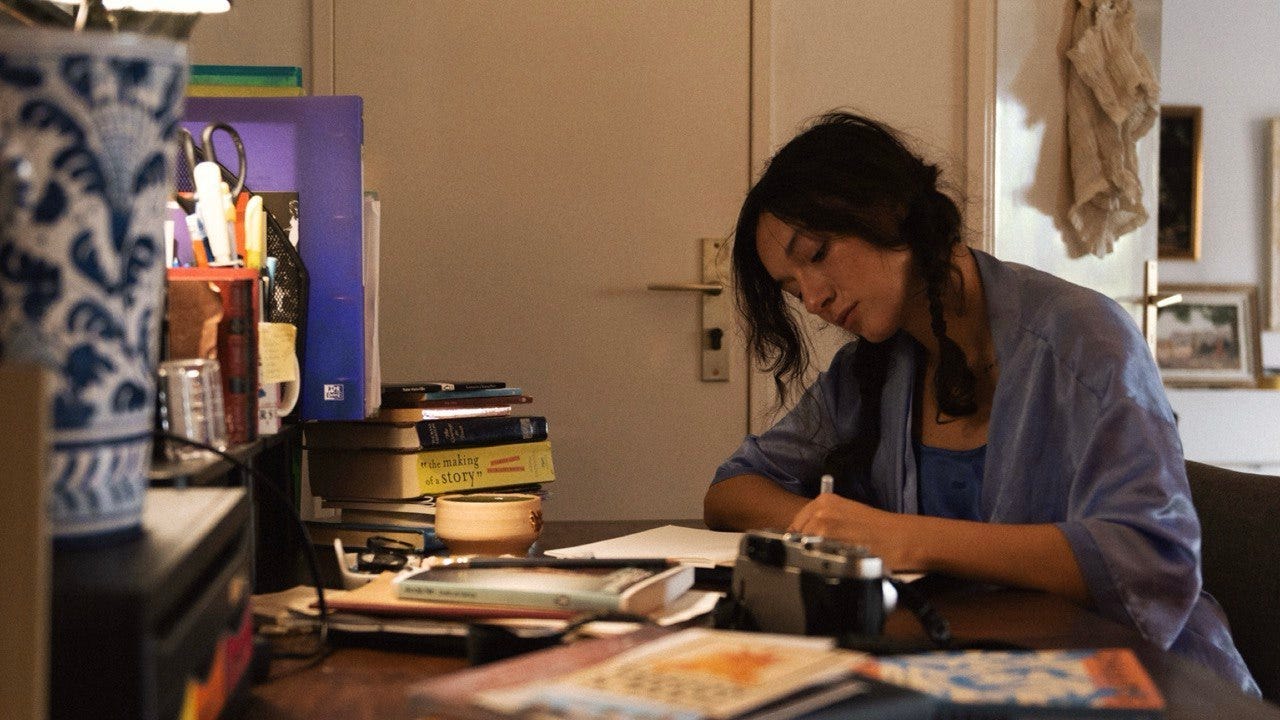
I’M NO CITIZEN of Lviv, and 20 years ago I was practically five years old, unaware of how the wonderful invention of electricity worked or the less wonderful concept of heating bills, running around somewhere in our family apartment in Mykolaiv, a city in the south of Ukraine. I remember using sledges to rush down the big hill from our central square all the way down to the river, making snowmen and snow angels – all the normal things a kid would do in those circumstances.
But I also remember coming back home to an almost scorching apartment. The air was so hot, we kept our windows open. Yes, boiling apartments seemed to me to be a universal Ukrainian value – if you can’t walk around in your tank top and boxers, why use heating at all? Not like you can adjust it anyways, the central heating system decides your temperature for you. Much different from Daniel’s old-school Lviv experience.
The last winters in Ukraine have been nothing like that. This winter is our fourth with constant missile attacks, endangering our critical infrastructure – water, electricity, heating, gas. And so far, the most brutal. See, the last few winters have been tough on electricity, but having no heating is a new one for many. Arguably, the toughest one to live without, considering keeping our apartments hot is integral to our winter experience.
This winter, I’ve been visiting my hometown for two months, which was more than enough to survive a few apocalyptic situations. Our house (or dacha in Ukrainian, a type of summerhouse in the village) is located just outside of the city, about a 30-minute drive. Here’s the catch: when my parents were renovating it, they failed to account for a full-scale war starting in a few years. So, as she always dreamed, my mom opted for heated floors as our main source of heat. Bad, bad idea in retrospect. The moment electricity went off (and it did, up to 20 hours at a time), the floors lost heat quickly.
Our water from a well couldn’t be pumped either. If it got really bad, we used the portable power generator for a few hours. And when it got even worse, we used our pichka too – which added a few degrees of warmth, but also a petrol-woody smell to the whole house and a few headaches.
Foreseen consequences: you have to outsmart the lack of electricity. You only eat whatever’s fastest to cook. You layer. You never take off your thermal wear (or socks). You layer some more.
Unforeseen consequences: your hygiene standards drop really fast; one shower every 5 days seems like a blessing. You get used to piles of unwashed dishes and clothes. You stop looking in the mirror – there’s no point, really. The only gym accessible to you is making circles around the house, trying to heat up (it’s even colder outside). Your life becomes a constant equation of heat efficiency you’re trying to solve.
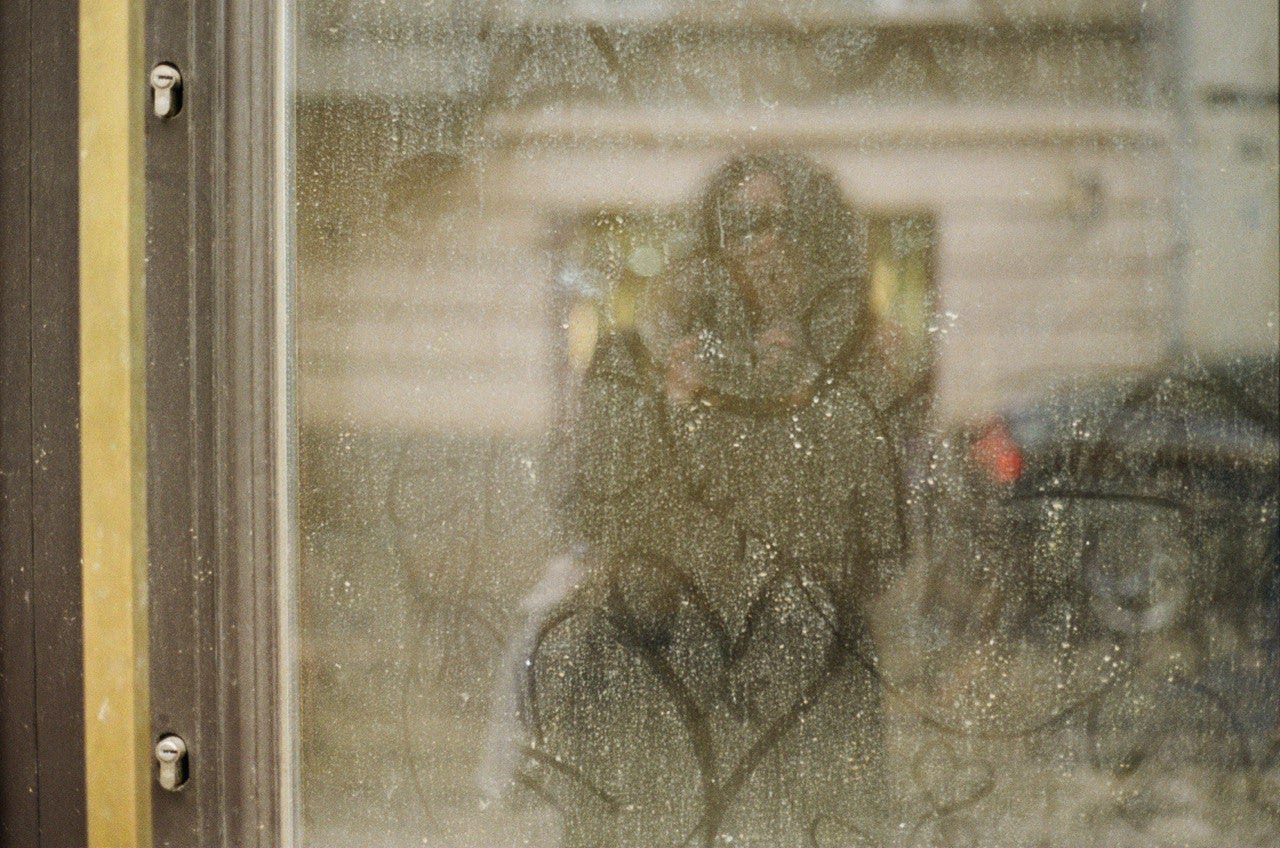
Only two months of such living conditions reminded me of a forgotten truth – unlike many Ukrainians, I am not resilient. At all. I crack under the easiest pressure, I depend on comfort, I crave all the benefits civilisation can provide. And I feel really out of order when those things are taken away from me.
Ukrainians would say: “It would be funny if it wasn’t so sad.” But I have a better word – absurd. The experience Daniel had 20 years ago is repeated in the most bizarre, out-of-control of circumstances, where we are forced to roll back down the Maslow pyramid, forced to walk back down the steps of civilisation we thought we’d already climbed.
Read more of Anastasia Lebedenko’s excellent writing on her Substack: A Personal War. starting with the cost of living (during the war) or for something uplifting, Good news from Ukraine! #3, where you can find lots of useful and interesting links, including videos from frozen river dance parties in Kyiv.
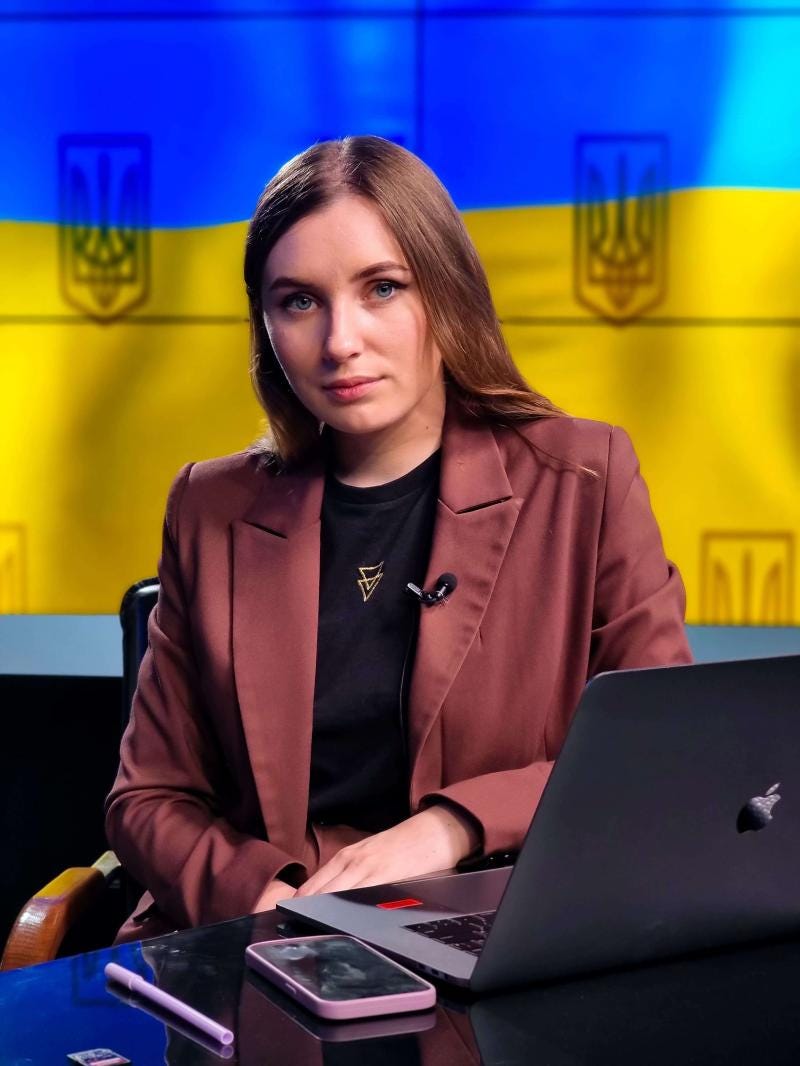
I HAVE NOT LEFT Ukraine since 2022, and I can say quite openly that this has been the most difficult winter of the war. Living in Kyiv now, amid the energy crisis, means waking up each morning and anxiously checking which basic comforts of modern life are still available – electricity, water or heating. On average, the temperature in our flat is currently between 10 and 16 degrees Celsius, while outside it can drop to minus 20.
We go to bed wearing several layers of clothing, sometimes even hats, under two or three blankets. We worry constantly about losing heating and water, as is already happening to residents on the left bank of the city. In such severe cold, pipes burst, and this almost inevitably means that a building becomes uninhabitable for several months.
People improvise in whatever ways they can – pitching tents inside their flats, using sleeping bags like those taken by hikers into the mountains, charging power banks whenever possible. We bought a camping stove, which means we are at least guaranteed hot food. That alone is a great relief.
The hardest situation, however, is faced by elderly people living alone, who have nowhere else to go and no money to buy even something as basic as a blanket. For them, thankfully, so-called “Points of Invincibility” have been set up, where people can eat and drink, warm up, charge their devices and even sleep.
To be honest, staying at home without electricity is deeply oppressive. We try to spend time in places that have generators. In Kyiv, people even organise dance parties on the frozen River Dnipro. From the outside, particularly to foreigners, it may look as though we are having fun and that things are not really so bad. In reality, this is a psychological coping mechanism – without it, it would be easy to sink into depression. Ukrainians have developed this resilience over the past few years and now even joke about potential nuclear strikes.
What helps most is the thought that spring is coming soon, and that the worst and hardest part of winter is already behind us. We simply need to hold on a little longer, and things will improve. And there is always the awareness that many people in the country are far worse off, especially those at the front, which makes it hard to allow oneself to fall into despair. That is exactly what the other side hopes for. They will not succeed.
Oksana Tkachenko is a journalist for TSN and 1+1 Media Group. She is also one of my former (superstar) students. Follow her on Instagram (@tkachenko_ksenia) and read an interview with Oksana on her work as a correspondent: Work in War
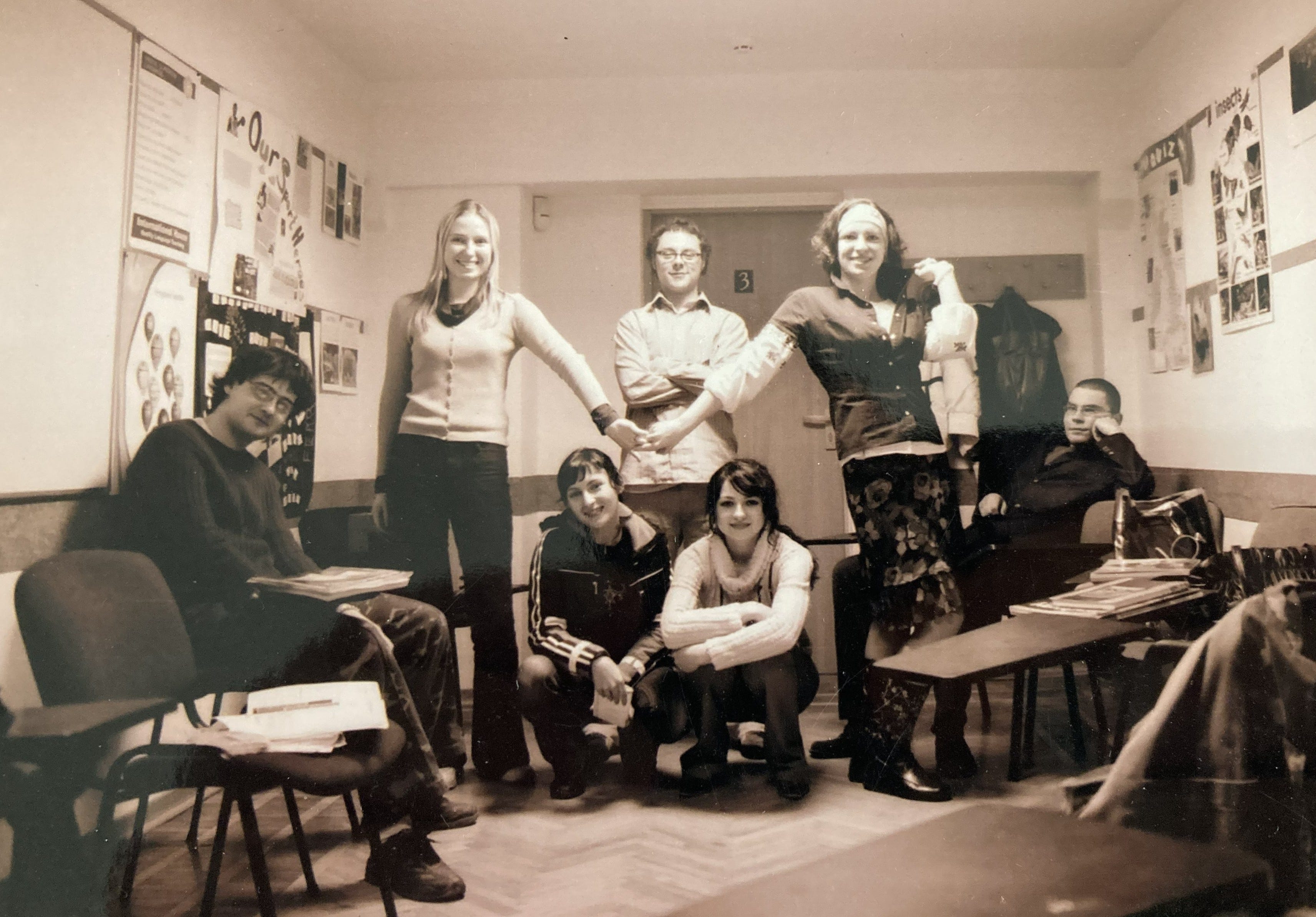
Happy times - one of my favourite classes from Lviv, spring 2006:
Thank you for reading, and do please like, share, comment, tell us what’s on your mind. 💙💛
 | A guest post by
|
Brilliant piece Daniel and co writers. A former neighbour and family friend is a well know Prof of War Studies. He writes on here and has been telling me about the winters without enough electricity. It is so important to keep Ukraine’s story in people’s minds too especially given everything else going on. Very moving.
Not for nothing, but thanks to you Daniel I now find Ukrainian names super fun to look at.
I’d say super fun to read but I’m pretty sure I’m not reading any of them correctly 🤣