
Let’s Be Reading Buddies?
Join me in my 2026 Reading Challenge

I don’t mind a nice, healthy challenge, but this past week presented a particularly onerous one: I taught some of the most obstreperous teenagers I’ve ever encountered – and with over 20 years’ experience, that’s saying something. I’m irascible at the best of times, though certainly not pusillanimous when it comes to facing a class of over-exuberant adolescents.
My rhizomatic approach probably exacerbated the situation (anyone who’s taught kids knows that they need some sort of structure and routines).
Anyway, you’re not here to listen to me caterwaul about what cruel and nasty creatures teenagers are, but take my word for it when I say there was plenty of kerfuffle.
What many of you are here for is my annual reading challenge – oh, the excitement, please, calm yourselves, steady your nerves.
As a bonus, there’s an additional challenge you may have already noticed: a vocabulary one.
In this post, I’ve woven in 15 vocabulary words provided by readers. The goal isn’t just to shoehorn them in, but to use them naturally and logically, with enough context for you to guess their meaning without reaching for a dictionary – all while keeping things reasonably concise and without too many prolixities (always difficult for me and my excessive wordiness).
In other words, no willy-nilly usage, which would be cheating – after all, the point in using new words is to prove you can do so. I’d hate to tempt my loyal readers to reach for their profanisauruses to look for an epithet like ‘mother pus bucket’ to sling my way.
This mirrors a speaking task I’ve given students over the years. In groups, they’re given three innocuous words – cat, freedom, spatula — and must work them into a conversation as naturally as possible. The other teams guess the words, encouraging fluency through synonyms, related vocabulary (ladle, spoon, knife, whisk, etc), and superordinates (cat: feline, creature, animal, critter, furball, kitty, pain-in-the-ass, cretin, waste of space, etc).1
Got that?
Feel free to ignore the vocabulary task entirely if you’re here purely for the book content.
But if you’re up for it, see if you can identify the 15 words I’ve used. Many should stick out like a sore thumb.
(What the hell is that noise outside? It’s doing my head in…sounds a bit like a…like a…doomiflotchet? It’s a…oh right, jackhammer, that’s what it’s called. Or pneumatic drill if you prefer. Anyway, I digress.)
No peeking! The answers are down below, along with a list of contributors.
Oh, and I may already have used a few – hope you’ve been paying close attention.
Reading, as any good language learner should know, is a wonderful way of picking up new vocabulary. But even native speakers can learn a variety of rich language. You just have to be wary of the context and usage; a lot of language can be archaic, especially when reading some Austen or Dickens:
For example, from Mansfield Park: “I said to the boy directly (a great lubberly fellow of ten years old, you know, who ought to be ashamed of himself), ‘I’ll take the boards to your father, Dick, so get you home again as fast as you can.’”
What a lovely word, lubberly! But it’s very low-frequency and while finding a use for it may not be so difficult, you might get some flummoxed looks when dropping it into conversation:
“Daddy, why are you so lubberly, is it because you don’t pay enough attention to what you’re doing, is that why you drop things all the time?”
“Stop it, young lady, you know how sensitive and splenetic I can be when confronted with insults, just because we are consanguineous doesn’t mean you can say these things to me, your dear father. Now be quiet and finish your dinner.”
“I can’t, whatever slop you made is execrable, who on earth do you think I am, one of your myrmidons? I’m your daughter, feed me properly for goodness’ sakes.”
“Daughter, you’re being too purblind in the way you comport yourself in front of thine father. You will go to your room at once to consider the best means of seeking propitiation.”
“Yes, father. Forgive me if I was acting too much like a phairy.”2
On to this year
Of all my reading challenges over the years, this is the one most likely to crash and burn. I’m a dreadfully undisciplined reader and almost always have multiple books on the go. What happens if a reading buddy insists we finish a book within a week?
How do reading buddies work, anyway? I’ve never done anything like this before, and my first quasi–book club experience was right here on Substack last summer.
(A former sidepiece wanted to be my reading buddy many years ago but we could never agree on what to read since we had wildly different tastes, and that went nowhere, much like our relationship.)
Last year’s reading challenge:

The results:

I’ll share the books I already own and want to get through. If you fancy reading together, let me know.
Or if there’s a book not listed here that you think I’d enjoy and want to read alongside me…let me know.
None of these are from my already ridiculous TBR pile, but if you suggest something that is on it? Even better.
While I’m not exactly parsimonious when it comes to books, I do need to rein in my profligate ways and stop buying quite so many. This was part of last year’s challenge, and I failed spectacularly.
The other major challenge, one I’m hoping to tackle come September, is whether this is finally the year I take on the behemoth that is À la recherche du temps perdu.3
I’ve been wanting to read Proust for years, and it was Kristine Benoit de Bykhovetz’s post, The Proust Year: Returning to the World Through Art, that may have tipped me over the edge:
I’m reading Proust this year as an attempt to step out of the reel - the endless scroll of images, impressions, reactions, and half-thoughts - and back into the real: into time, memory, attention, and the slow work of perception.
The entire piece is beautiful; I’ve reread it several times. Choosing just one excerpt is nearly impossible, but this will do nicely:
Why I’m Reading Proust This Year
There is a particular unease that runs quietly through modern life: the sense of moving through the world without ever quite touching it. We adapt. We learn our surroundings. We make ourselves comfortable. But the comfort is strange, because it is achieved by dulling our sensitivity. Habit smooths the edges of experience, and slowly a thin screen forms between us and reality. We live, but at a distance.
Kristine and I had a lovely exchange in the comments, where I mentioned that, as a long-time teacher, I’ve always thought of September as my real New Year:
Daniel, I love the way you describe September as a “new year” for reading, that feels very right, and very Proustian in its own way. There’s something about choosing the moment that matters as much as choosing the book.
We’ll see what happens come September. This year also brings a rather significant milestone for me: I’ll be cracking the half-century mark.
Which feels like as good a moment as any for reflection – and wondering where on earth all that time went.
My print books are in the photos below. I’d say there’s a healthy, eclectic mix – don’t go looking for any pareidolia because you won’t find any. You will find books full of snoddygosters (inevitable in history or politics books).
Spot anything you fancy reading?
PRINT
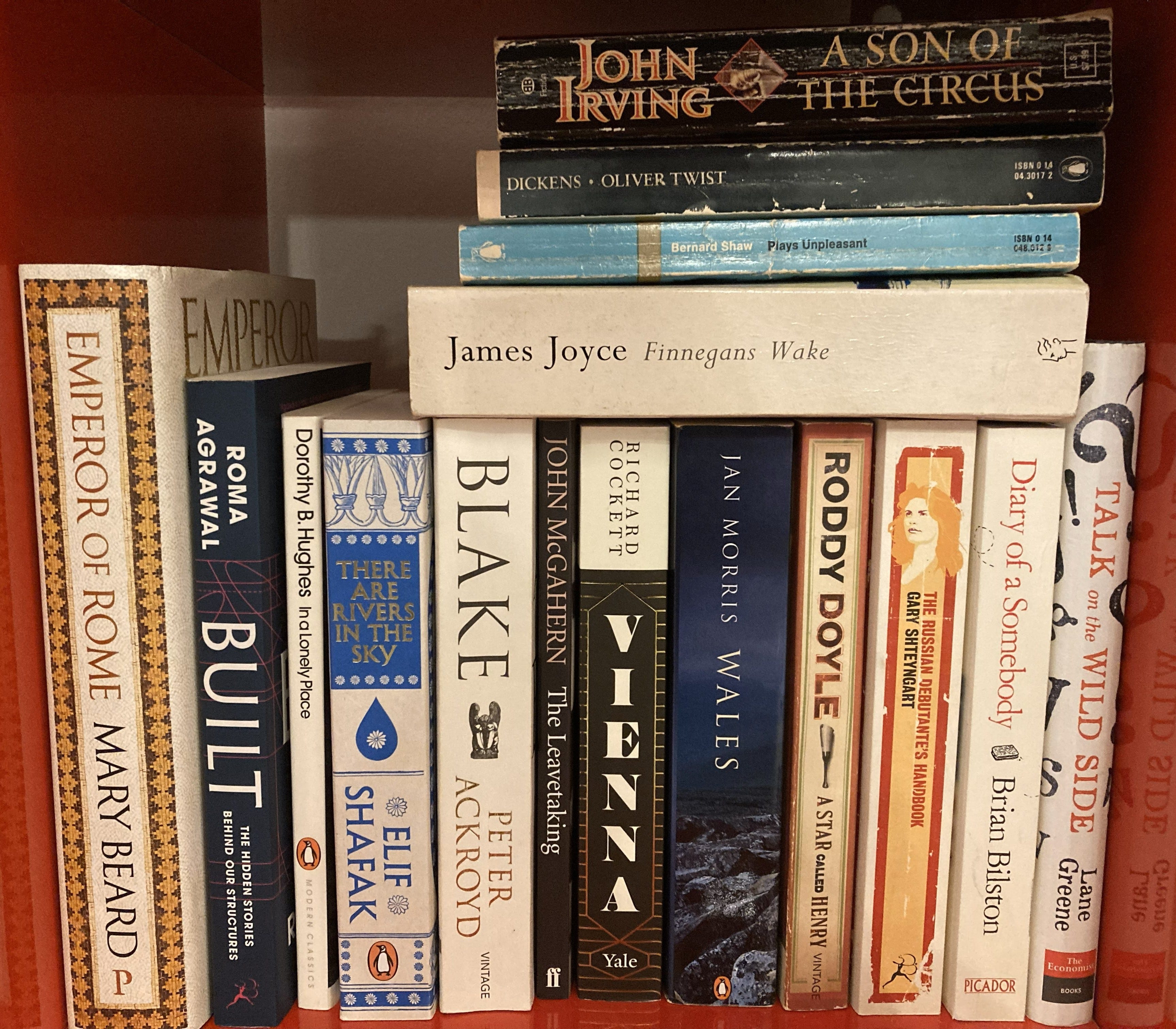
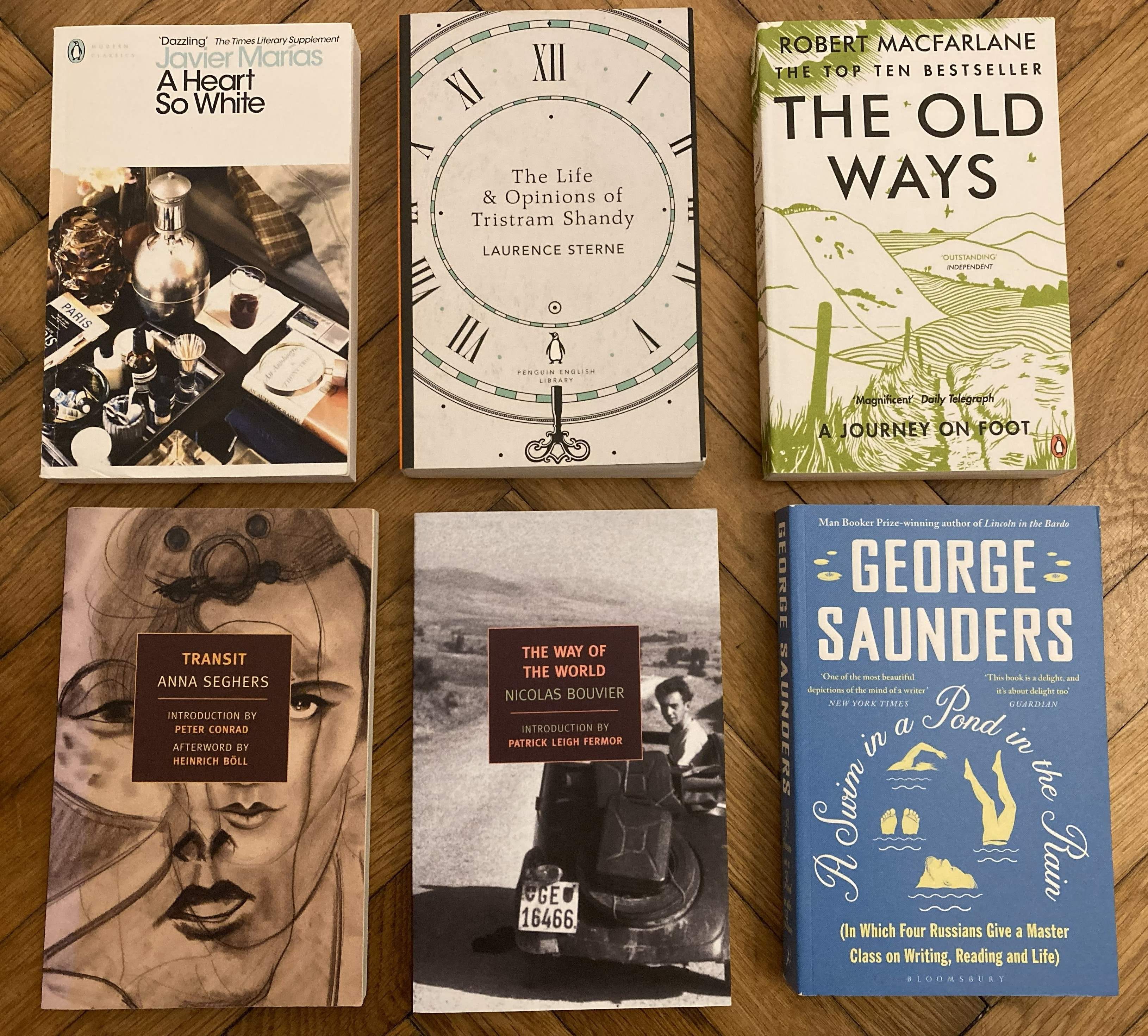
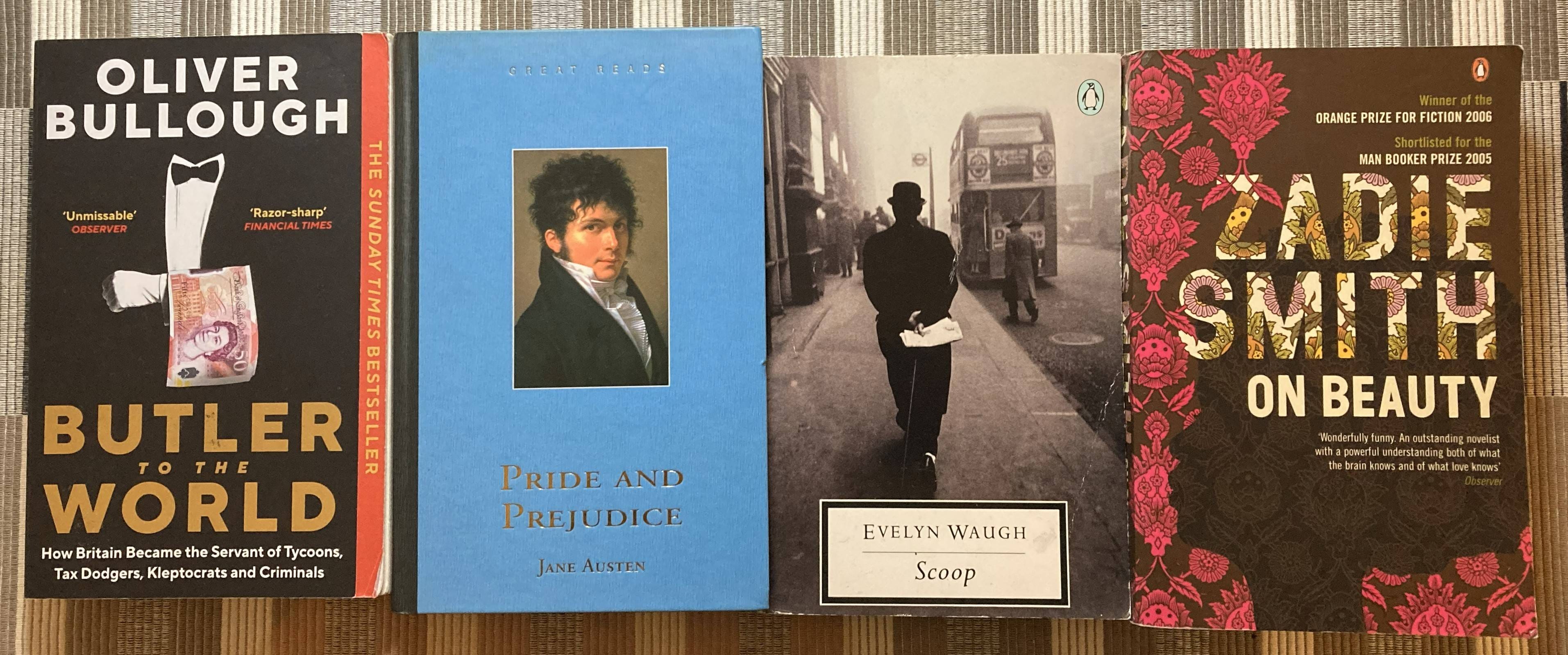
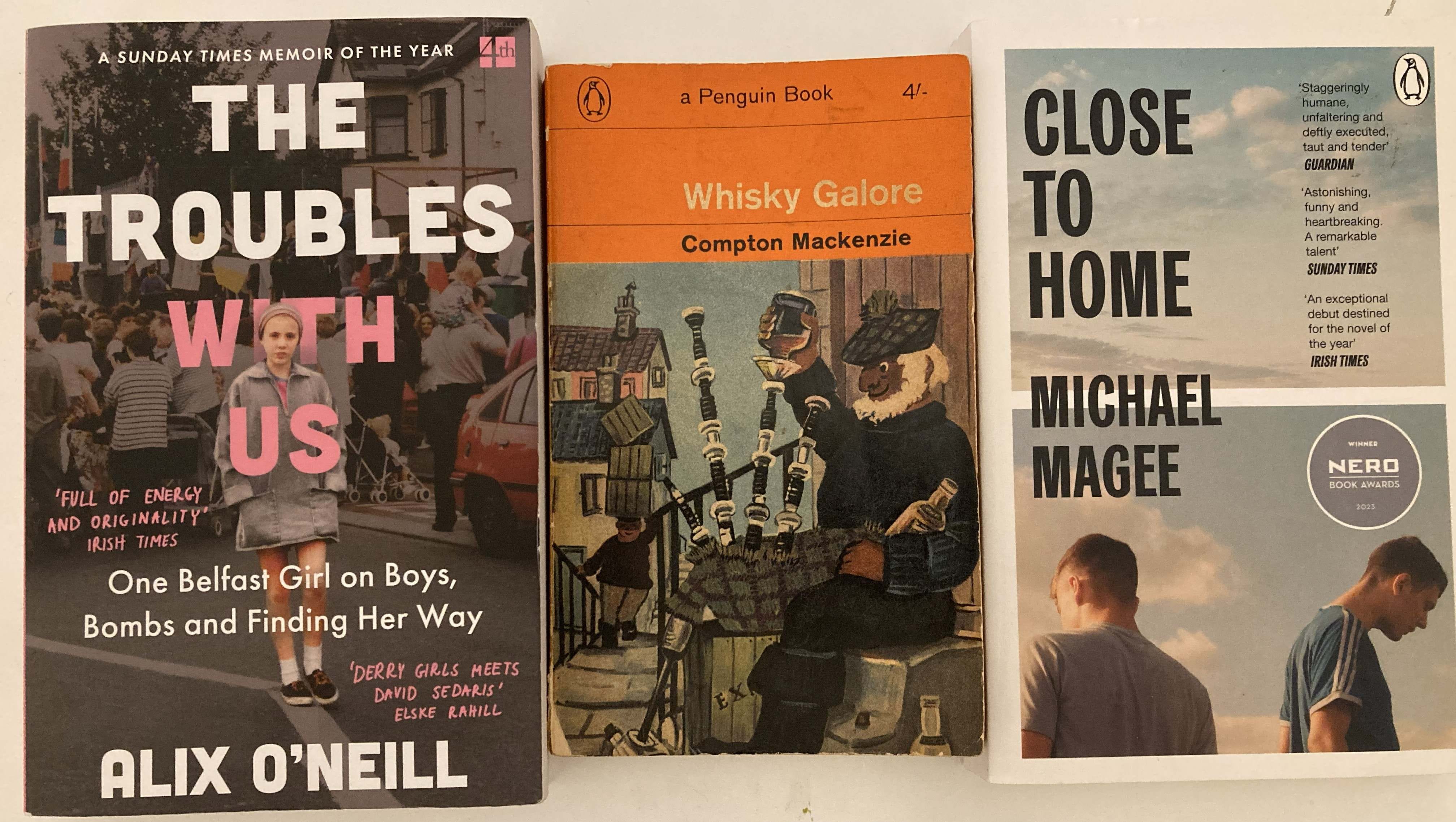
E-BOOKS
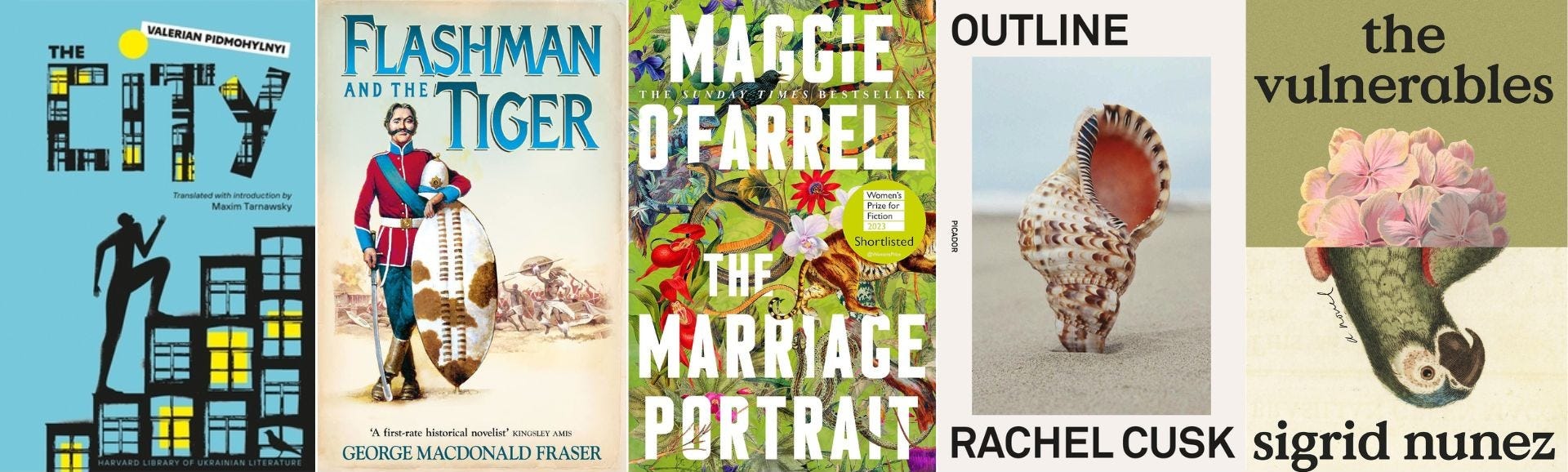
Fiction
Love’s Labours Lost, Shakespeare
The Tragedy of Titus Andronicus, Shakespeare
Hunger, Knut Hamsun
Outline, Rachel Cusk
The Marriage Portrait, Maggie O’Farrell
The City, Valerian Pidmohylnyi
McTeague: A Story of San Francisco, Frank Norris
The Monk, Matthew Lewis
Rock, Paper, Grenade, Artem Chekh
The Hollow Man, John Dickson Carr
The Vulnerables, Sigrid Nunez
Flashman and the Tiger, George MacDonald Fraser
Greek Lessons, Han Kang
Six Characters in Search of an Author, Luigi Pirandello
The Red and the Black, Stendhal
Attrib. and Other Stories, Eley Williams
Complete Short Stories of Saki, H.H. Munro
The Memory Police, Yōko Ogawa
Non-fiction
The Dictionary of Obscure Sorrows, John Koenig
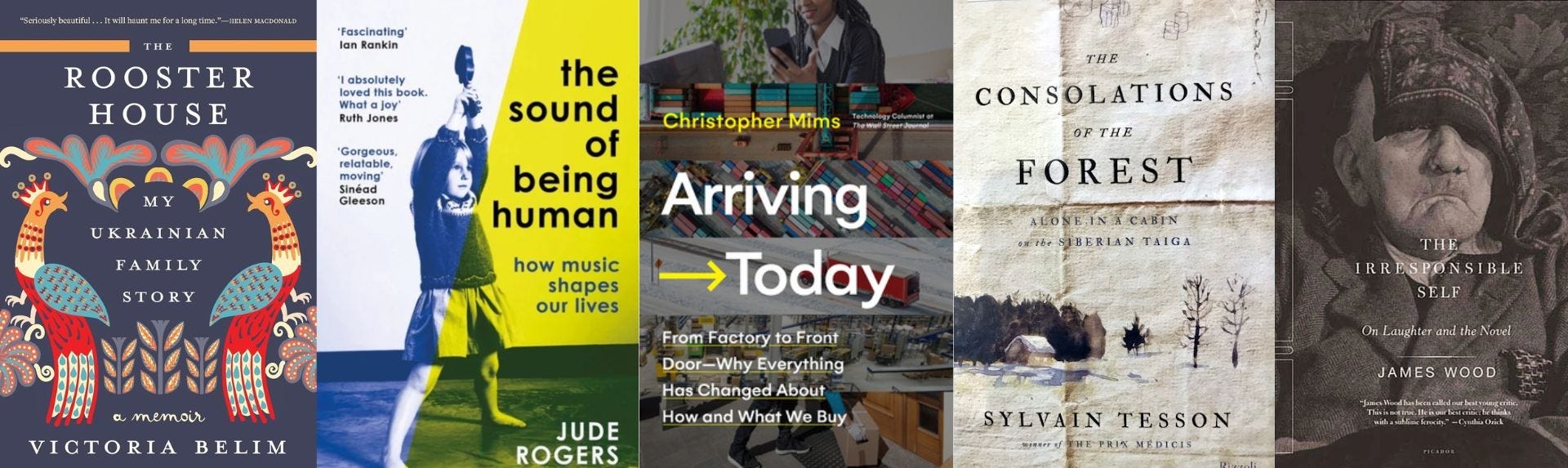
The Sound of Being Human: How Music Shapes Our Lives, Jude Rogers
The Rooster House: A Ukrainian Family Memoir, Victoria Belim-Frolova
A Beginner’s Guide to Dying, Simon Boas
The Bookshop Woman, Nanako Hanada
The Big Change: America Transforms Itself, 1900-1950, Frederick Lewis Allen
How Not to Write a Novel, Howard Mittelmark
Afternoons with the Blinds Drawn, Brett Anderson
The Irresponsible Self: On Laughter and the Novel, James Wood
Essays After Eighty, Donald Hall
The Education of Henry Adams
The Americanization of Benjamin Franklin, Gordon Wood
How the Word is Passed: A Reckoning with the History of Slavery Across America, Clint Smith
Bury My Heart at Wounded Knee: An Indian History of the American West, Dee Brown
Arriving Today, Christopher Mims
The Autobiography of Benvenuto Cellini
The Consolations of the Forest, Sylvain Tesson
The Cunning Linguist: Ribald Riddles, Lascivious Limericks, Carnal Corn, and Other Good, Clean Dirty Fun! Richard Lederer
Walden, Henry David Thoreau
This Child Will Be Great: Memoir of a Remarkable Life by Africa’s First Woman President, Ellen Johnson Sirleaf
Salt, Fat, Acid, Heat: Mastering the Elements of Good Cooking, Samin Nosrat
Re-reads
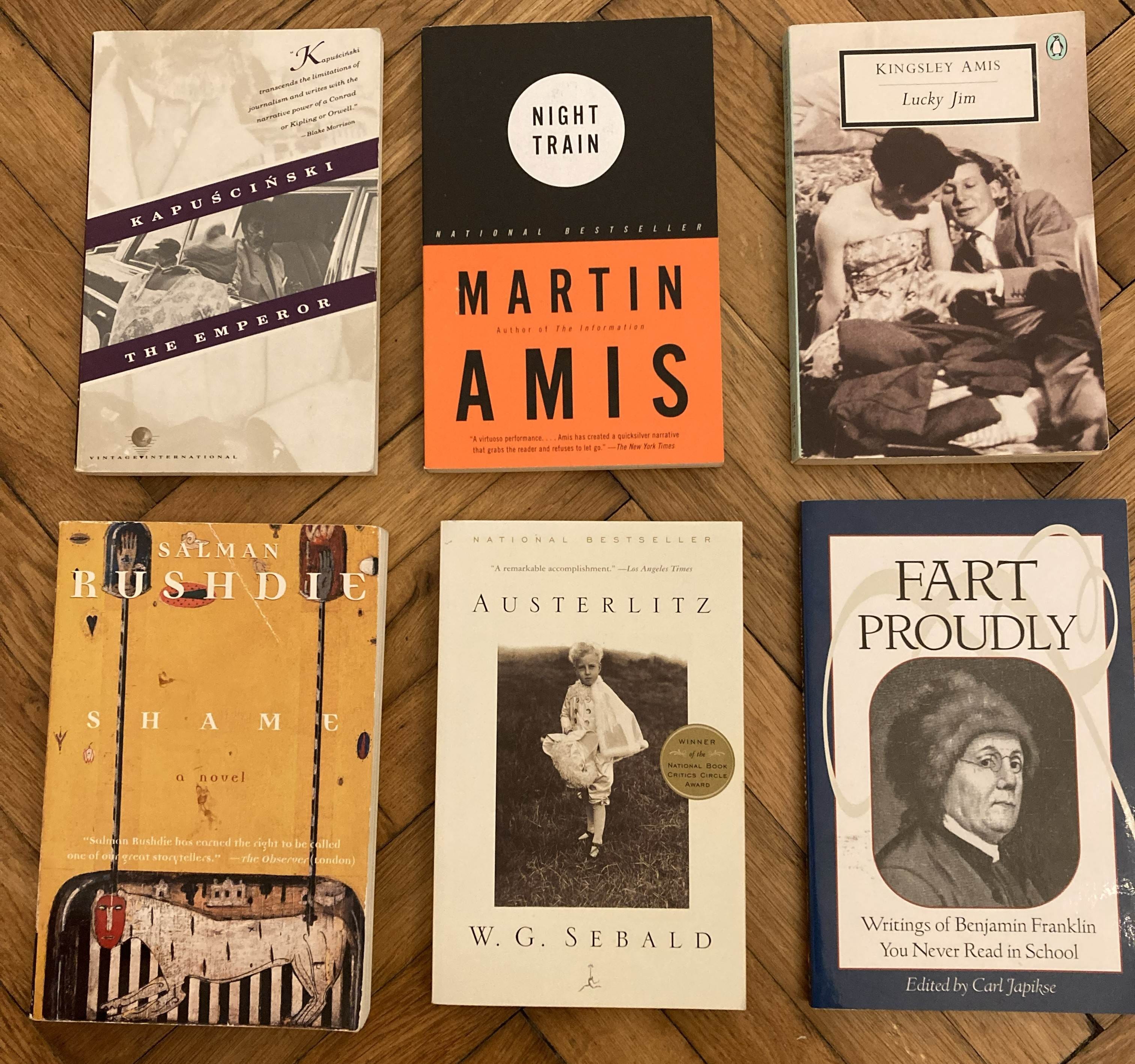
Currently reading
Reading Like a Writer, Francine Prose
The Story of Philosophy, Will Durant
A Secret Alchemy, Emma Darwin
Forty-One False Starts: Essays on Artists and Writers, Janet Malcolm
Emperor of Rome, Mary Beard
The Troubles with Us, Alix O'Neill
Let’s read together!
Now if you’ll excuse me, just need to go finish doing the dishes, I’ve had a saucepan soaking overnight in an attempt to get the fond off the bottom, it’s proving very stubborn.
Words and contributors
Sidepiece, Jackhammer, Kerfuffle Matt Cyr
“Mother pus bucket” (from Ghostbusters) Lewis Holmes
Lubberly Marci Cornett
Profanisaurus Jayne Marshall
Parsimonious (popular word!) LKN and Rebecca Rocket
Fond (as a noun) Rebecca Rocket
Rhizomatic Alexandra
Pareidolia Maryan Pelland Pen2Profit (who so kindly said my “writing is for sure not codswallop.” I don’t necessarily agree, but who am I to quibble?)
Irascible Tim Dawkins
Pusillanimous Chris L. 🎖️✅
Snollygoster Scott Monaco
Doomiflotchet polistra (an Okie dialect word for a whatchamacallit)
Obstreperous Ricardo A. Martagón
Many others from this exceptional post:
Dickensian English in Modern Terms (thank you Rebecca, and Chuck)
As always, thank you for reading, liking, commenting, sharing, printing out and I welcome and encourage any and all comments, especially when using some of this splendid (not splenetic) new vocabulary.
I’ve written a few books as well, if you want to read some of my other pontifications on a range of topics. Alternatively:
‘Waste of space’ sounds awfully harsh, doesn’t it? When I was a kid, my mother called our beloved cat Linus ‘a bloody waste of space’ after he had shat or upchucked yet again on the armchair. She still feels bad about it. Poor Linus.
In Search of Lost Time, if you prefer, right Ricardo A. Martagón? 😉
I like to read books in Spanish as a vocab refresher, but I'll just read your future posts to learn more English vocabulary.
Oh this is wonderful! I'm feeling way more eloquent now. And you've made me super proud to be responsible for a Jane Austen citation. ❤️ I love how your daughter has perfected the use of "lubberly". 😄
I'm so tempted to sign up for the reading challenge, but I'll soon be embarking on a co-reading of Little Women with a friend (I'm ashamed it'll be my first time reading), and I want to reread Wuthering Heights ASAP just so I can grumpily rant about the new adaptation, and I have not forgotten that A Classroom in Kyiv is on my TBR list.
But...
Having said all that, I would so be up for re-readings and discussions of A Swim in a Pond in the Rain (I've always meant to return to that one) and P&P once you get to them. Let me know!